

Condensation & Rework Losses: Why Generic Aluminum Air Grilles Drain HVAC Contractors’ Margins
Disclosure: I have over 12 years working in aluminum air grille manufacturing, serving HVAC engineering companies and OEM brand owners across North America. This article shares real on-site pain points, technical analysis and practical solutions accumulated from thousands of commercial construction projects. All viewpoints come from frontline construction and factory production experience, with no exaggerated sales claims.
If you’ve run an HVAC contracting business or managed a building materials OEM brand for more than two years, you must have encountered this maddening cycle: you sign a large commercial project, carefully calculate every expense to lock in your slim profit margin, and write off air grilles as simple, low-risk decorative trim. You pick cheap mass-produced aluminum grilles to cut upfront costs, thinking they won’t impact your overall project delivery. This is the costly mistake that eats into your revenue before you even finish handover.
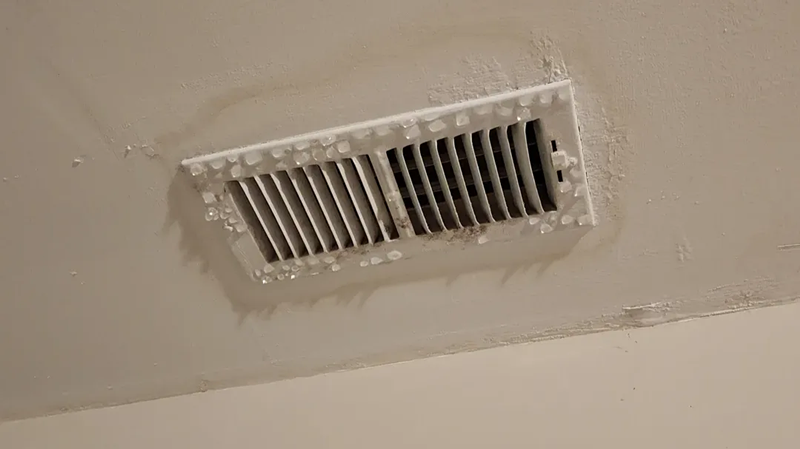
I once consulted a Texas contractor who contacted me in a panic mid-project. The local humidity is notoriously extreme—summer air holds so much moisture you can practically feel it clinging to walls. He ordered standard non-thermal-break aluminum grilles for a high-end hotel renovation, and within three weeks after installation, the ceiling under every grille began dripping continuously. The client called daily, furious that brand-new drywall was warping, paint peeled, and carpet suffered water stains.
What made the situation far worse? Every property owner naturally groups grilles, ductwork and air plenums as a complete supporting system. When condensation damage appears, they do not separate component responsibilities. All rework labor, material replacement, repair compensation and delayed project penalties land solely on the HVAC contractor’s shoulders. The contractor told me he lost nearly $18,000 in unexpected rework fees for that single hotel project, all stemming from underperforming aluminum grilles.
The root cause of endless condensation lies in the basic design flaw of conventional aluminum frames. Ordinary aluminum has extremely high thermal conductivity, with wall thickness thinner than a grocery store receipt in many low-cost bulk models. When frigid cold air from internal ducts meets hot, humid air trapped inside attic spaces, temperature difference triggers instant condensation on the grille surface. Many contractors mistakenly believe swapping out faulty grilles alone can fix the issue, yet this solution is as ineffective as covering a sinking dinghy with a single band-aid. The real problem originates from uninsulated ductwork, poorly sealed plenums and thermally conductive grille frames. Without addressing all three factors, dripping will reappear shortly after repairs.
Aside from condensation headaches, unreliable OEM manufacturers create a second layer of hidden losses for engineering firms and brand operators. Over more than a decade in this industry, I have seen countless brands suffer irreversible reputational damage due to shoddy outsourced grille production. Mass-produced generic aluminum grilles suffer inconsistent dimensional tolerance, uneven surface oxidation after several months of use, and sharp creaking noises from thermal expansion and contraction as temperatures shift between day and night. Custom private-label orders bring extra trouble: many small factories delay delivery schedules arbitrarily, engrave brand logos with rough, uneven edges, and substitute low-grade aluminum alloy to slash their own production costs. Every after-sales complaint, site revisit and client dispute created by these factory shortcuts falls to you, the contractor or brand owner, to resolve.
It takes months of marketing, channel maintenance and client communication to build stable project cooperation, yet one batch of defective grilles can dissolve client trust overnight. Word spreads quickly among local developers and construction managers; repeated quality complaints will cut off your steady project sources, a hidden loss far harder to calculate than direct rework costs.
After witnessing hundreds of contractors fall into this identical industry trap, I began focusing on thermal-break aluminum grille OEM customization to address these universal site challenges. A complete thermal insulation bridge inside the grille frame blocks heat transfer between cold inner air and warm ambient air, fundamentally eliminating condensation formation and cutting rework risks by a large margin. Automated precision production lines unify dimensional accuracy, eliminate thermal expansion noise, and support fully customized sizing, surface finishes and private brand engraving. Flexible batch production accommodates both small trial orders and large commercial bulk demands, with standardized technical drawings and parameter documents to support tender bidding for engineering projects.
Many business owners hesitate to switch to thermal-break grille solutions due to slightly higher upfront procurement costs. Based on long-term project data I have collected, the extra investment in qualified thermal-break aluminum grilles is always offset by eliminated rework fees, reduced after-sales labor and stable long-term client cooperation. Cutting corners on grille materials to save a small initial sum only creates larger, recurring financial losses later.
For HVAC contractors and OEM brand operators aiming to stabilize profit margins and maintain consistent client reputation, thermal-break customized aluminum grilles are not merely an optional upgrade—they are a necessary long-term cost control strategy. If you are still struggling with constant ceiling condensation, unstable OEM quality and endless post-installation disputes, evaluating thermal-break grille manufacturing solutions will help you avoid the recurring profit drain that plagues so many players in this industry.