

Why Your Ceiling Air Vent Is Making Noise (And How to Fix It Before It Gets Worse)
A ceiling air vent is supposed to be invisible in both function and presence—quietly delivering comfort without drawing attention to itself. So when it starts making noise, it’s not just annoying; it’s a signal that something in your HVAC airflow system is no longer balanced.
The good news? Most vent noises are not random. They follow clear mechanical causes—and once you understand them, you can usually diagnose the issue in minutes.
1. Airflow Restriction: The #1 Cause of Vent Noise
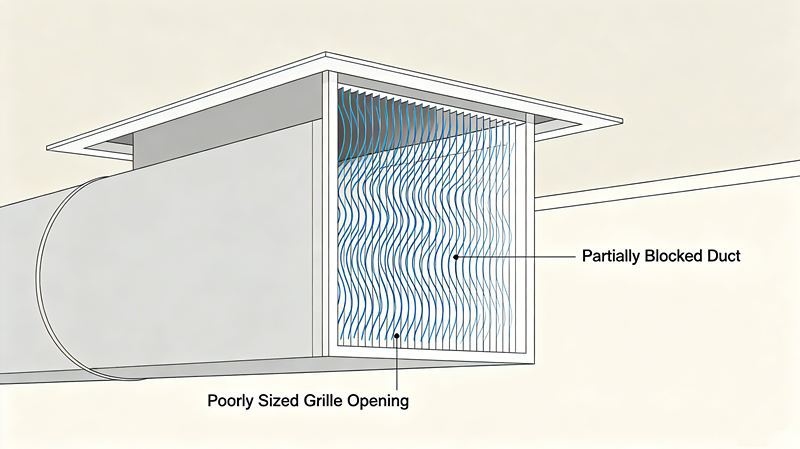
One of the most common reasons your ceiling vent starts to whistle, rattle, or hum is restricted airflow.
When air is forced through a partially blocked duct or a poorly sized grille opening, velocity increases unnaturally. This creates turbulence, which you hear as noise.
Typical symptoms:
- High-pitched whistling
- Uneven airflow between rooms
- Strong air “blast” from one vent, weak from another
Common causes:
- Dirty air filters
- Dust-clogged return grille
- Undersized duct or vent opening
- Furniture blocking return airflow
👉 Fix: Replace filters, clean grilles, and ensure return air is not obstructed.
2. Loose Vent Cover or Poor Installation
If you hear rattling or vibrating sounds, the issue is often mechanical rather than airflow-related.
Ceiling vents are mounted using screws, clips, or frames. Over time, vibration from the HVAC system can loosen these components.
Signs:
- Metal rattling when AC turns on/off
- Noise changes with fan speed
- Visible movement of vent grille
👉 Fix:
- Tighten mounting screws
- Add rubber washers or vibration pads
- Reinstall grille with proper alignment
3. High Air Pressure in the Duct System
Excessive duct pressure can create continuous “whooshing” sounds at the vent.
👉 Fix:
- Balance airflow
- Adjust blower settings
- Ensure enough return air pathways
4. Damaged or Warped Air Vent Material
Low-quality vents may deform over time due to heat cycles and pressure changes, causing vibration noise and airflow instability.
👉 Fix:
- Upgrade to rigid aluminum construction
- Use reinforced frame design
- Avoid thin stamped materials in high-flow zones
5. Duct Resonance (Hidden but Serious Issue)
Sometimes the noise is not at the vent—it’s coming from deep inside the duct system.
Long ducts can amplify airflow noise like a sound tube.
👉 Fix:
- Add duct insulation
- Install acoustic lining
- Reduce long straight duct runs
Upgrade Option: Prevent Noise Before It Starts
Many vent noise problems are not “repairs”—they are design issues from outdated vent systems.
Modern architectural airflow solutions reduce turbulence, balance pressure, and eliminate visible disruption in ceilings.
You can explore a professional-grade solution here:
👉 linear slot diffuser
Linear systems are specifically designed to:
- Reduce air velocity spikes
- Improve airflow distribution
- Eliminate visible ceiling clutter
- Operate at significantly lower noise levels
Final Thought
A noisy ceiling vent is rarely just a minor inconvenience. It is usually a symptom of airflow imbalance, installation flaws, or outdated vent design.
Fixing the noise is not only about comfort—it directly improves HVAC efficiency and system lifespan.
If you are upgrading or specifying air distribution systems, selecting a properly engineered diffuser design can prevent these problems entirely before they begin.